
Drive Venture research guide
Teen Drowsy Driving.
Practice makes better drivers. Rest helps keep them safe.
Fatigue is gradual
There isn’t a magic number.
Fatigue builds gradually. Some days a driver feels sharp for a long stretch. Other days they get tired much faster. Sleep, stress, time of day, traffic, weather—all of it counts.
That’s why no app or website can promise that any specific amount of time is safe. Safety is about good choices throughout the drive.
Why teen drivers need special attention
Teens are different.
Teen drivers are still building new skills, but they’re also more likely to run short on sleep. Being tired can slow reaction time and decision making, even if that person doesn’t fall asleep.
NHTSA notes that drowsy driving affects more than whether someone actually dozes off: it can reduce alertness, attention, reaction time, judgment, and decision-making ability. CDC also identifies young drivers as a group at high risk for drowsy driving, particularly in the early morning and late at night.
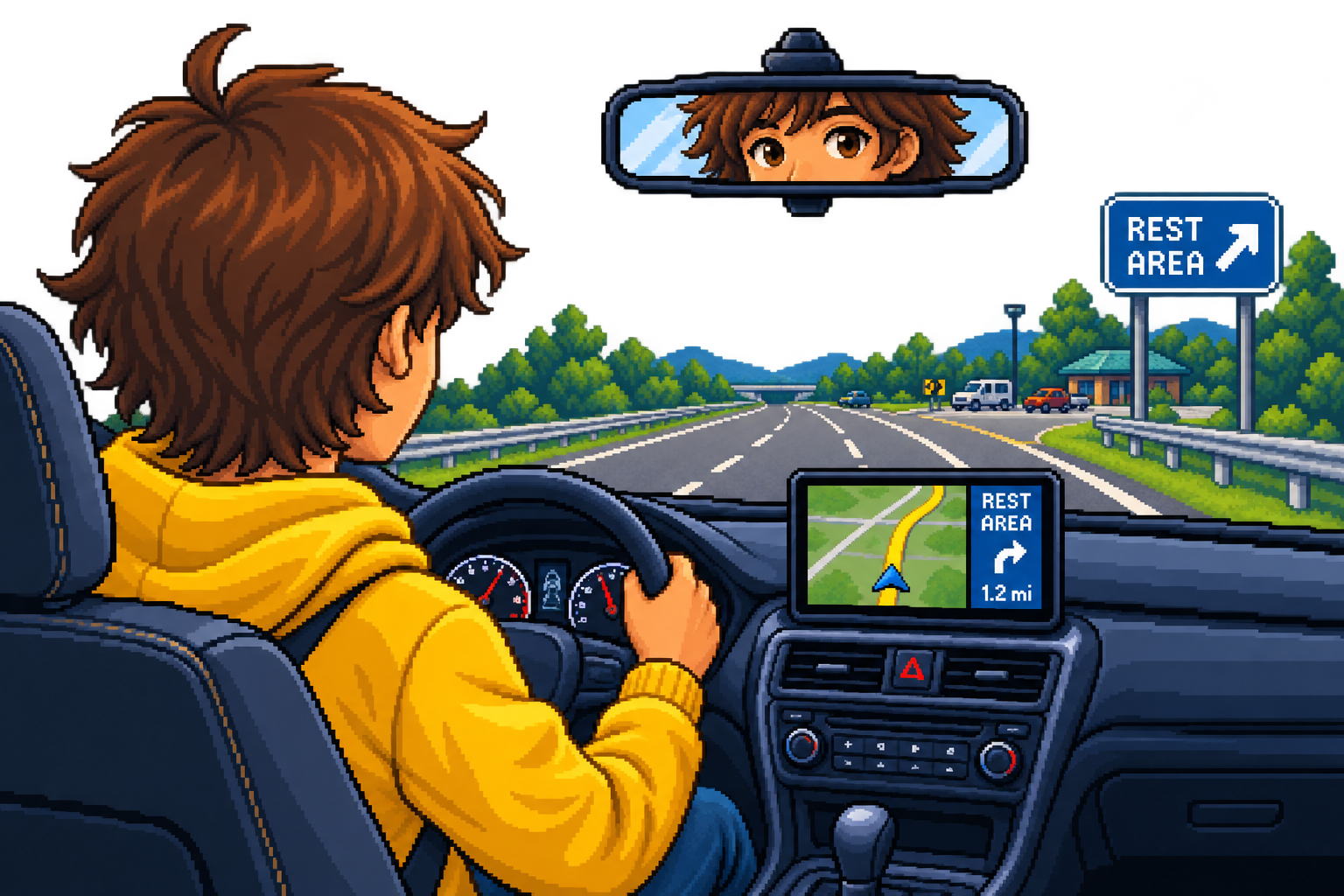
Practice with purpose
Building experience over time.

Early practice sessions are often shorter and focused on one or two skills. As confidence grows, families add new challenges—maybe busier roads, nighttime driving, or bad weather.
Notice what changes. It’s variety, not endurance. Many shorter drives in different conditions usually teach more than one long drive.
Breaks on longer trips
What experts recommend.
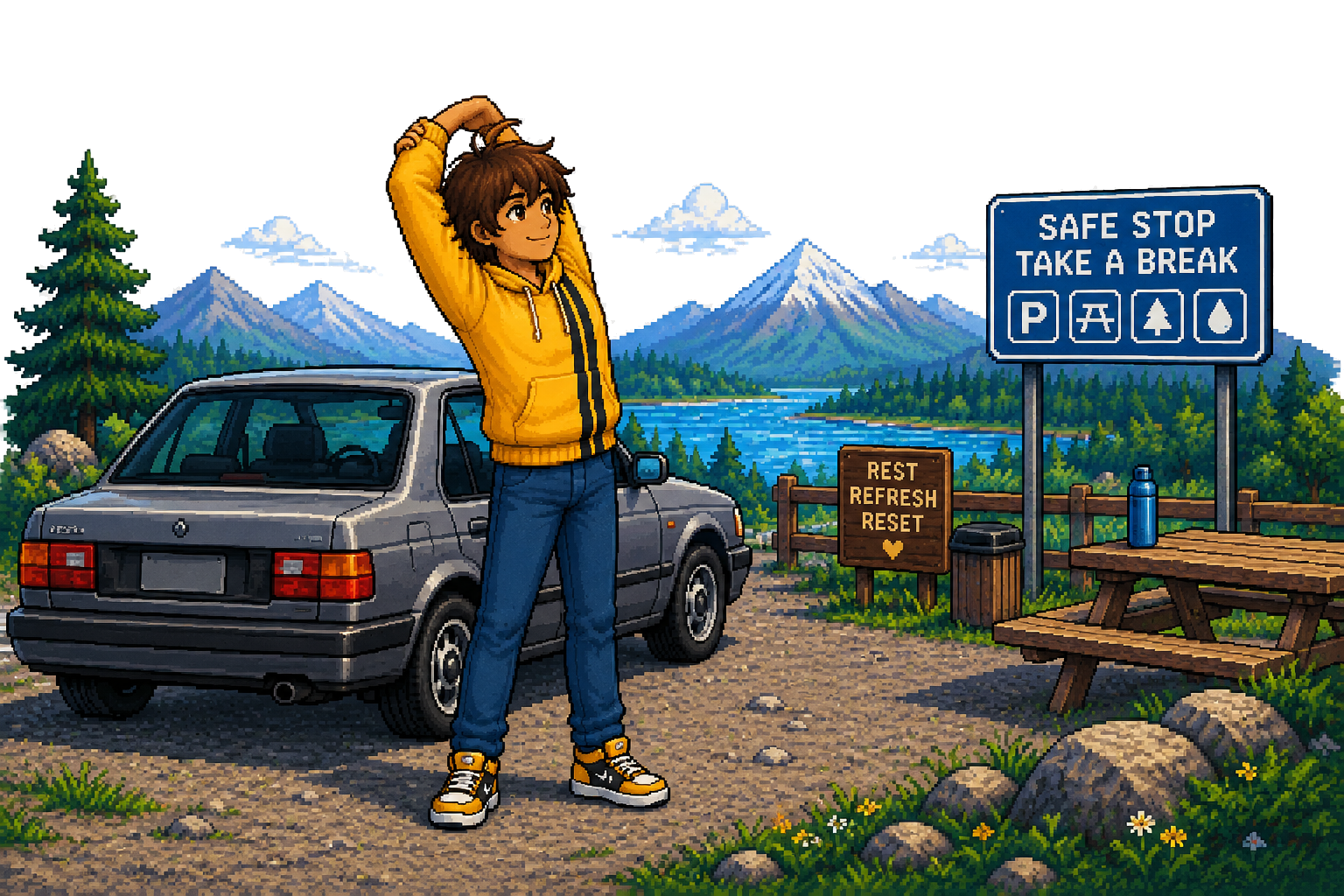
Safety organizations commonly suggest taking a break about every two hours on longer trips. That’s a reminder to stretch, switch drivers, or rest.
That isn’t a promise that shorter drives are safe. It’s a general habit to encourage regular breaks, and drivers should stop sooner whenever they feel sleepy or less alert.
How the game handles long drives
Drive Venture’s policy.
Because games can shape behavior, we choose not to reward staying behind the wheel longer. We reward variety and steady progress across many drives.
Our policy is simple: we encourage frequent practice and taking breaks.
If you reach our limit—if you see a message saying we’ve stopped counting time—don’t worry. It doesn’t mean you’ve done anything wrong. It just means we’ve hit the point where we don’t want the game encouraging longer uninterrupted driving.
If you’re still on the road, just focus, finish the trip safely, and take a break before starting another long stretch.
Sources
Research and safety guidance.
Drive Venture prioritizes pediatric, public-health, traffic-safety, and peer-reviewed sources. General break guidance is presented as a safety habit, not a time threshold below which driving is guaranteed to be safe.
- American Academy of Pediatrics. The Teen Driver. Pediatrics. 2018; reaffirmed with reference and data updates in 2024.
- National Highway Traffic Safety Administration. Teen Safe Driving: How Teens Can Be Safer Drivers.
- National Highway Traffic Safety Administration. Drowsy Driving: Avoid Falling Asleep Behind the Wheel.
- Centers for Disease Control and Prevention. Eight Danger Zones: Teen Drivers.
- Centers for Disease Control and Prevention. Sleep Duration and Injury-Related Risk Behaviors Among High School Students — United States, 2007–2013. MMWR. 2016.
- AAA Foundation for Traffic Safety. The Prevalence and Impact of Drowsy Driving. 2010. Includes guidance to schedule breaks every two hours or every 100 miles on longer trips.
- Martiniuk ALC, Senserrick T, Lo S, et al. Sleep-Deprived Young Drivers and the Risk for Crash: The DRIVE Prospective Cohort Study. JAMA Pediatrics. 2013;167(7):647–655. doi:10.1001/jamapediatrics.2013.1429.
- Pizza F, Contardi S, Baldi Antognini A, et al. Sleep Quality and Motor Vehicle Crashes in Adolescents. Journal of Clinical Sleep Medicine. 2010;6(1):41–45.